





Osechi Ryōri — A Taste of New Beginnings
Oshōgatsu: Welcoming the New Year in Japan

In Japan, the New Year—Oshōgatsu—is more than just the turning of a calendar page. It’s a pause, a moment when families gather and welcome in good fortune for the year ahead and do several symbolic rituals together. In the last days of December, families do ōsōji, a big cleaning to start the new year with fresh energy. Homes and entrances are decorated with symbolic ornaments like shimenawa (sacred ropes) and kadomatsu (pine and bamboo arrangements) to welcome the gods.
At Midnight on December 31, temple bells ring 108 times to cleanse people of last year’s attachments and start anew.

New Year Morning

On January 1st, after busy days of preparing for the New Year, Japan wakes to calm and quiet. Some go out to witness the first sunrise while others celebrate with a lazy morning, gathering at the breakfast table and sharing the first dream of the year, called the "hatsuyume". Some believe that in a symbolic way hatsuyume tells us about the upcoming year. There are four powerful symbols that are believed to be the most auspicious. Seeing Mount Fuji in your dream promises success and greatness, a hawk symbolizes strength and ambition, and an eggplant is considered lucky because its name, nasu, also means “to accomplish,” hinting at achievements to come. A crane represents long life, happiness, and fidelity. Whether their dreams were lucky or not, the year could still be set right in the morning, thanks to one of the world’s most elaborate meals: osechi. So everyone gathers around a bright, colorful breakfast, tasting each dish slowly, knowing that every flavor carries a wish for the year ahead. But what exactly is osechi, and why is it so important?
Osechi Ryōri: Food for the Spirit

Osechi ryōri is the beautiful assortment of dishes prepared to celebrate the start of a fresh year. Osechi is considered part of the broader cultural tradition (washoku) that is recognized as a UNESCO Intangible Cultural Heritage.
Osechi is more than just a festive meal. Each dish is filled with meaning, a symbol of all the good things we hope for in the new year—for ourselves and those we care for. This comes from the Japanese belief in kotodama, the idea that words, names, and even symbolic objects carry a hidden power that can shape events and influence the world. Osechi embodies this belief, turning food into magic. Eating it is not only a delight for the senses but also a way to welcome health, happiness, and prosperity—a meal that nourishes both body and spirit.
History of Osechi

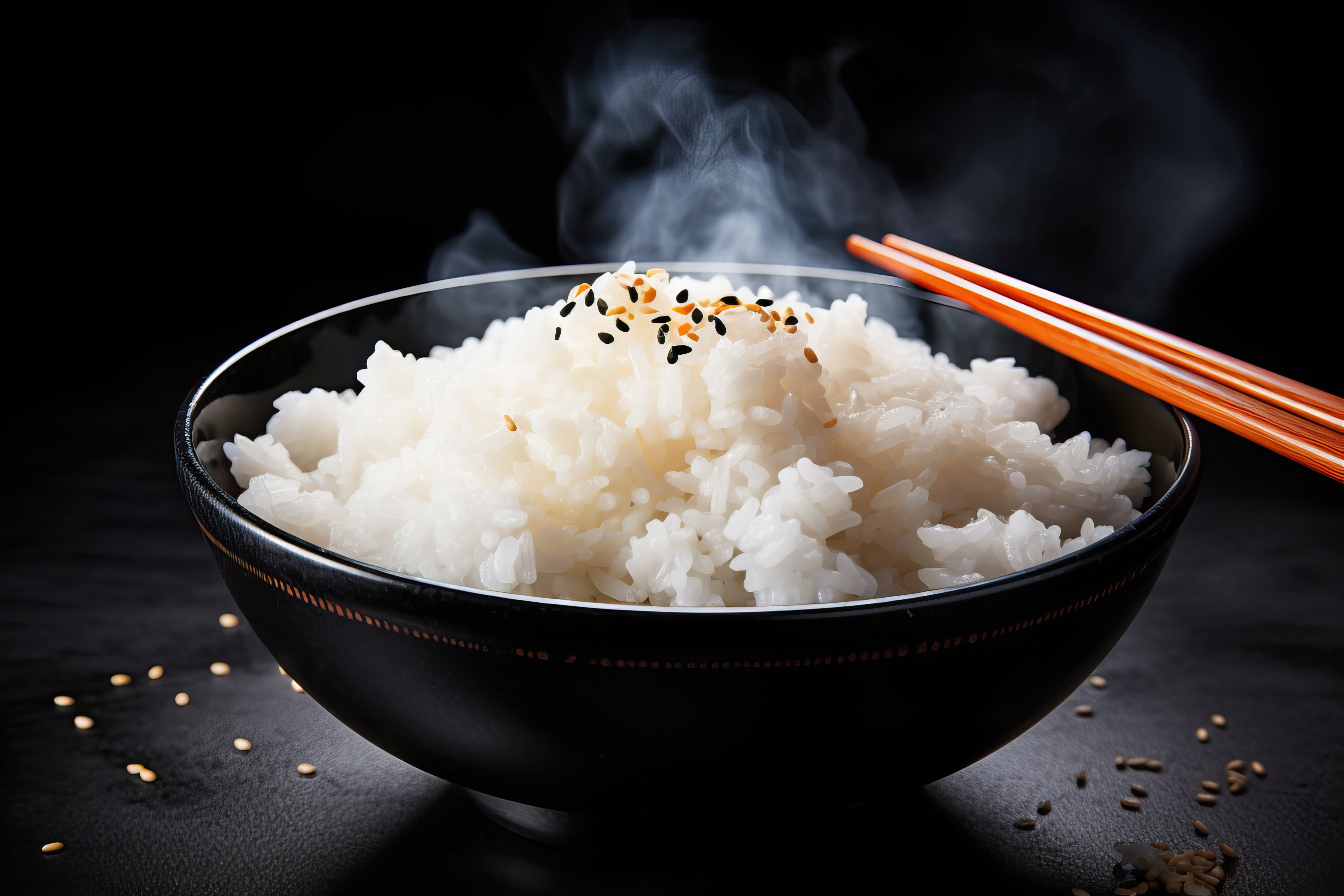
From as early as the 7th century, osechi was a special food shared with the gods. Families would first place the dishes on the household altar, the kamidana, as an offering, and only then enjoy them together. In those early days, osechi ryōri was simple, made mostly of rice, which was highly valued at the time, and it held great importance as a sacred meal.
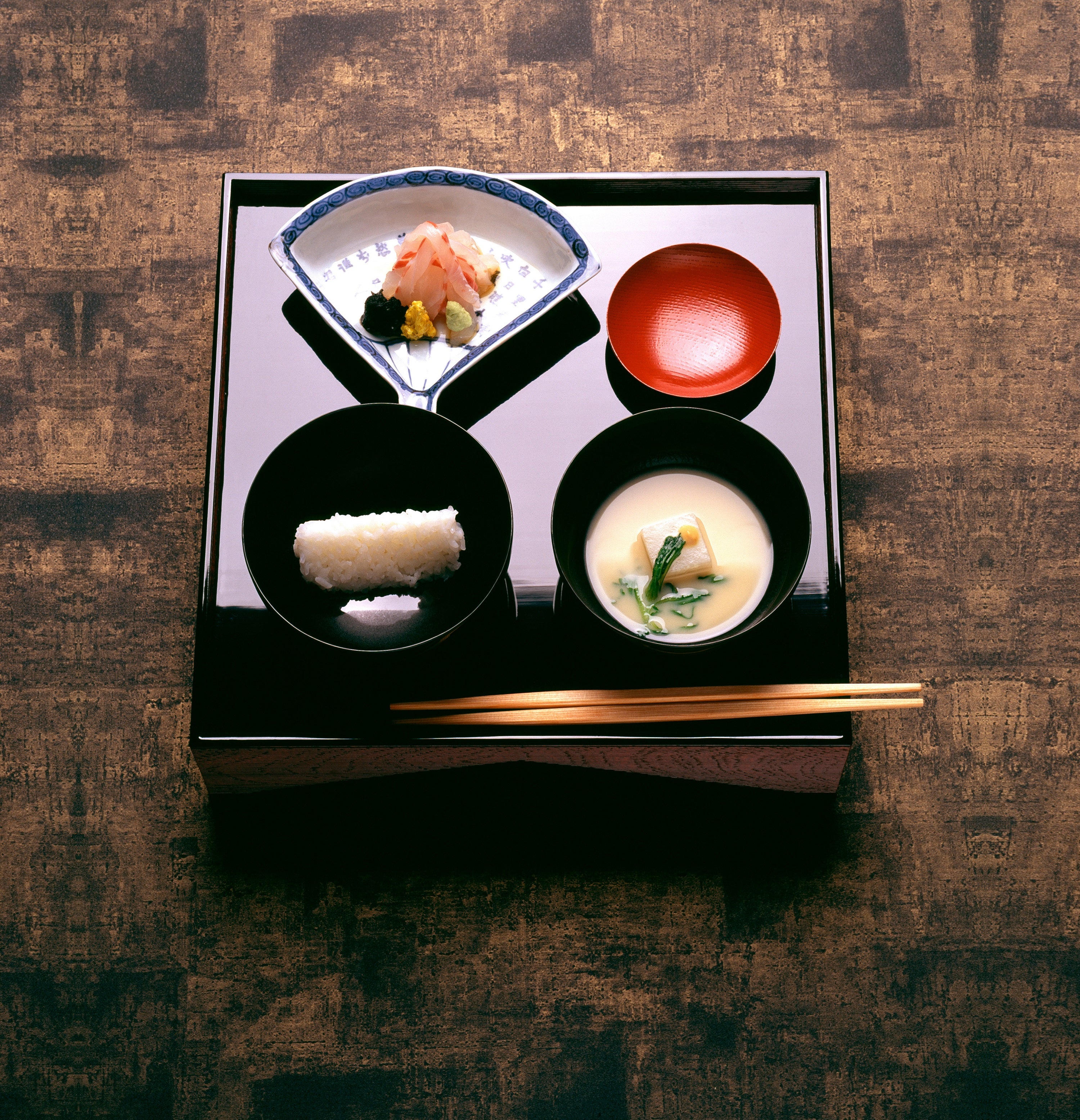
Over time, osechi evolved, especially under the influence of the samurai. The upper warrior class—the feudal lords and samurai—celebrated important occasions with elaborate, ritualized banquet meal called honzen-ryōri. Small dishes were arranged on legged trays, each with its own purpose and meaning. It was from this tradition that osechi ryōri grew into the colorful, symbolic feast we know today.

The name osechi itself comes from o-sechiku (御節供), which originally referred to the special foods served at the imperial court’s annual ceremonies. New Year’s Day was one of the five important celebrations, called gosekku, held at the Imperial Court in Kyoto, and osechi was part of these festive occasions.
Many of today’s standard osechi dishes, like kuromame (black soybeans), tazukuri (dried anchovies), and tataki gobo (burdock), were originally noble banquet snacks served with sake. Other staples such as kamaboko, datemaki, and kuri kinton were also part of these banquets and guests would receive them as gifts to take home.
During the Edo period, osechi became recognized specifically as New Year’s food and began spreading to the townspeople as merchants grew wealthier. Salt-seasoned dishes became common, carp gave way to red seabream, and zōni—originally a samurai wedding snack—became a New Year’s dish enjoyed by everyone. Osechi was often presented ceremonially, with rice, fish, and simmered dishes arranged carefully, sometimes displayed on decorative stands adorned with symbolic objects like a crane, a pine or plum branch that stood for traditional values like resilience and strength.

Jūbako

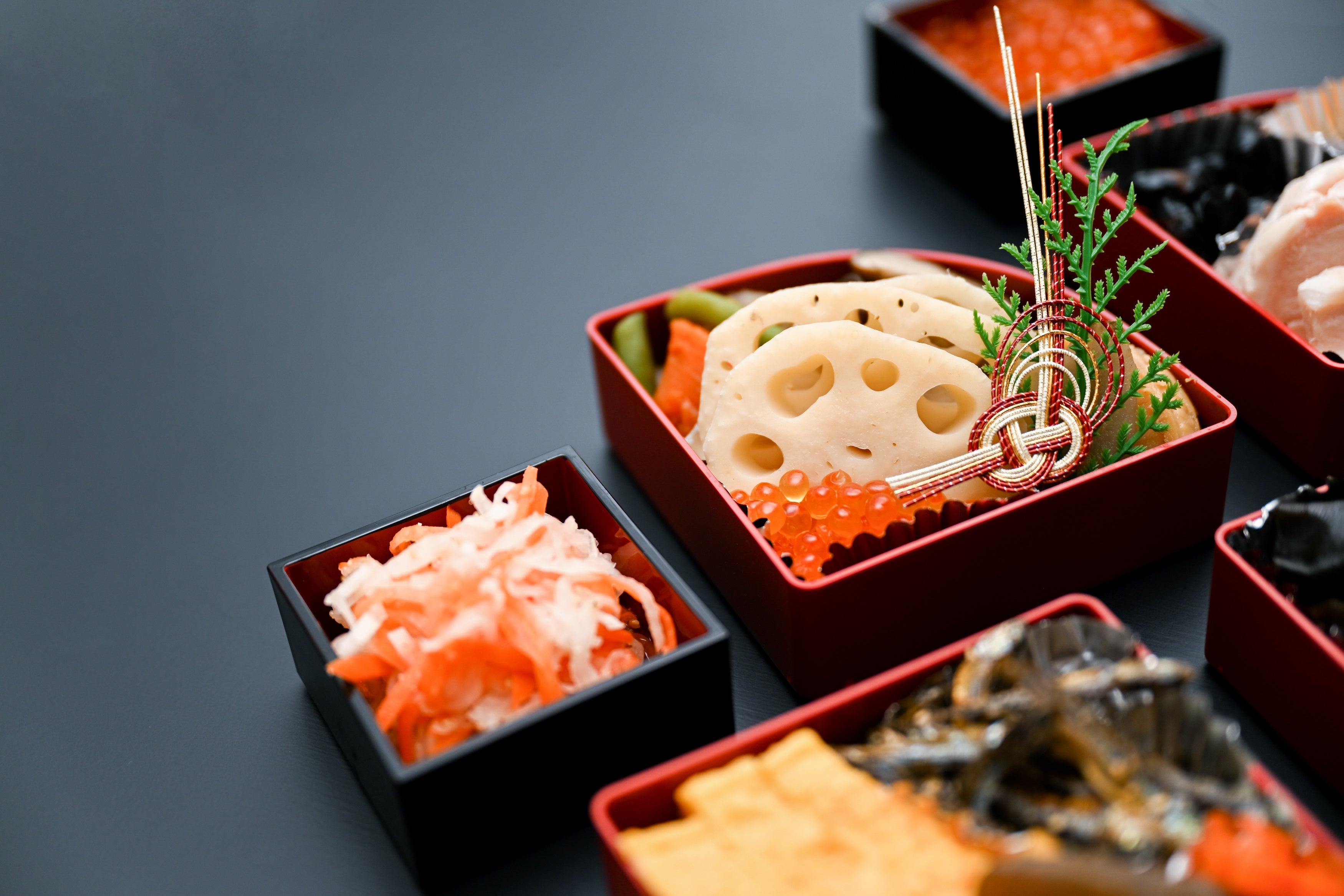
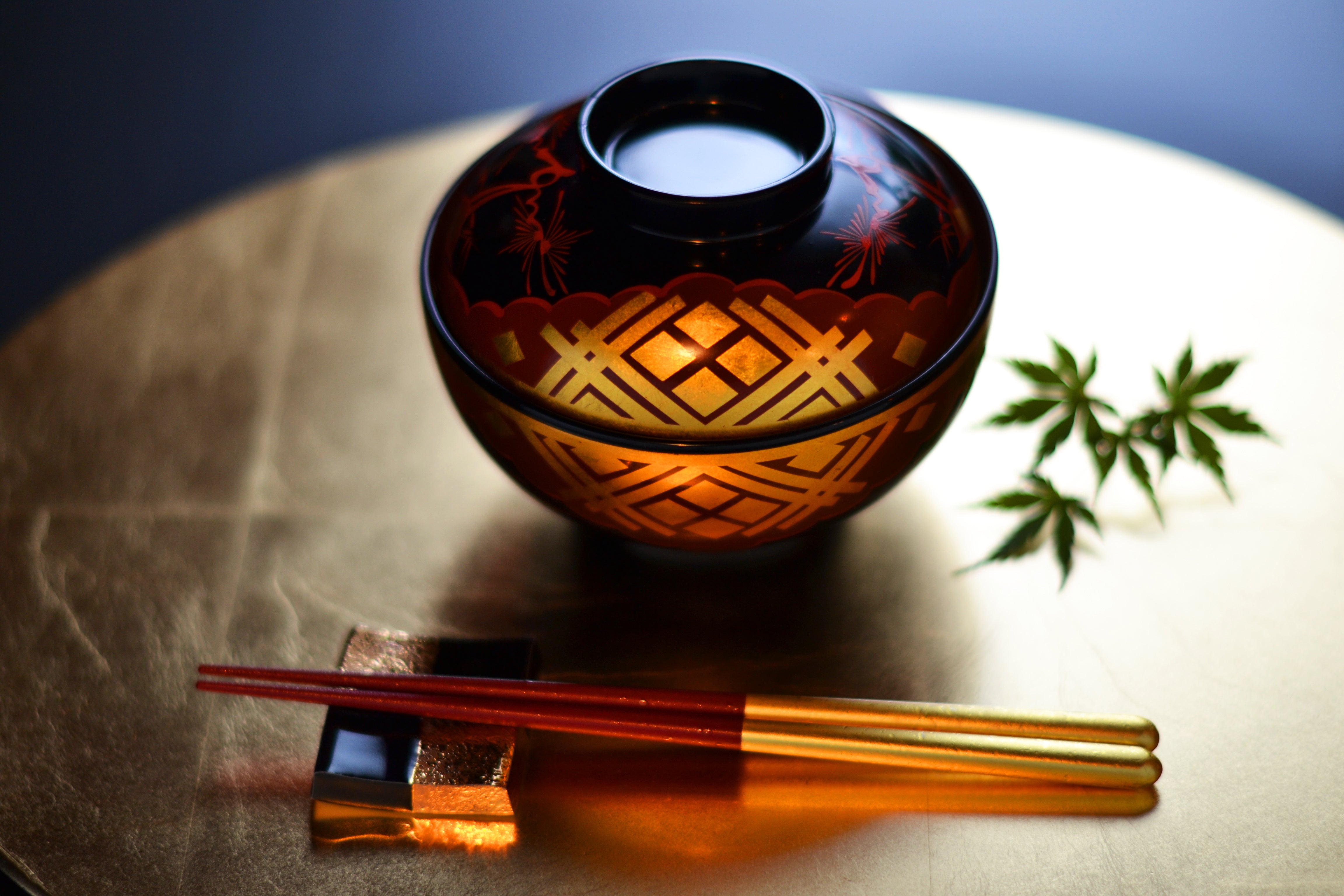
About 200 years ago, in late-Edo and early Meiji era, they started putting osechi into small multiple-tier boxes. They usually have two or more stacked layers, and they were lavishly decorated. They were wooden boxes coated with urushi lacquer—the natural sap of the urushi tree and a beloved material that became one of the hallmarks of Japanese fine art. In the jūbako each tier holds different osechi dishes, keeping flavors separate and making the presentation visually appealing. The stacked layers also symbolize layers of happiness, prosperity, and long life for the new year.
Typical Osechi Foods and Their Meanings
First, each region had its own style of osechi, which gradually became standardized. Today, with only minor differences in seasoning, most of Japan enjoys a similar osechi meal. There are 12 basic dishes that cannot be missing from any osechi assortment.

Kuromame (black soybeans): Eating them brings health and also productivity — a hard work will definitely be rewarded.

Tazukuri (dried sardines): Represents a bountiful harvest and good crops.

Kazunoko (herring roe): Symbolizes fertility and a wish for many children.

Datemaki (sweet rolled omelet): Stands for learning and scholarship for successful academic studies and personal growth through learning.

Kuri Kinton (sweet chestnuts with mashed sweet potato): Represents wealth and prosperity.

Kamaboko (fish cake): Its red and white colors symbolize celebration and good luck.

Ebi (shrimp): Shrimps' shape reminded people of an old man's curved back so it symbolizes long life and wisdom.

Kohaku Namasu (pickled daikon and carrot): Represents happiness and celebration with its red and white colors.
 Renkon (lotus root): Its holes symbolize a clear view of the future.

Gobo (burdock root): Represents strength and stability.

Tai (sea bream): Associated with celebration and good fortune.

Zōni (mochi soup): Symbolizes family unity and a warm start to the year.

The symbolic foods of osechi and the lovely home ornaments are more than old customs—they’re reminders of what people hope for most as a new year begins. After the shared meal, with their wishes renewed and spirits lifted, families put on their coats and walk together to the local shrine for the first prayers of the year. The path is lined with others doing the same, each carrying their own small hopes. As the shrine bells ring, they offer gratitude for the past and welcome whatever the new year will bring.


Leave a comment