


Onigiri: Japan’s Beloved Rice Ball
Onigiri is often called Japan’s soul food. Since ancient times, it has been a simple, essential part of everyday life in Japan. But what makes it so fun and irresistible?

Onigiri: The Basics
Onigiri is a Japanese rice ball made from plain white rice (sometimes salted), usually shaped into a triangle and often wrapped in nori (seaweed). Inside, you’ll often find simple salty or sour fillings. Because it’s easy to carry and eat by hand, onigiri has been a convenient meal since ancient times. What began as a way to use leftover rice gradually became a fresh, everyday food. Today, you can find onigiri almost everywhere in Japan—from convenience stores and supermarkets to bars and restaurants.

The Long History of Onigiri
A few decades ago, archaeologists excavating at a highland settlement in the Bijo mountain range in Ishikawa Prefecture uncovered something unexpected: a triangular piece of carbonized rice. Nearly 2,000 years old and clearly shaped by human hands, it is now famous as the oldest onigiri ever discovered. Researchers believe that this rice ball was either an everyday preserved food, or an offering to spirits to ward off evil. In Japan rice balls are used for ritual purposes even today.
Chopsticks came to Japan around the 7th century, but they were not yet widespread. So to make sticky Japanese rice easier to pick up, people rolled it into small balls. This made it perfect as an outdoor picnic lunch. Back then, rice balls didn’t have fillings yet—they were only seasoned with salt. Around the 12th century, many samurai carried rice balls filled with a pickled plum, wrapped in bamboo sheaths as a quick lunchtime meal during war. Around the same time, wrapping them in seaweed also became popular, while fillings such as fish only became common in modern times.
The Secret of Onigiri: Choosing the Right Rice
Since rice is the main ingredient of onigiri, choosing the right type is essential. Onigiri is often eaten outdoors, away from home, which means it’s usually enjoyed cold. For this reason, it’s important to use rice that tastes good both warm and cold. The best rice has well-formed grains and strong stickiness—qualities found in low-amylose rice, which also holds its shape well even when it absorbs moisture. So, let’s see what to choose for the best onigiri.

Milky Queen

Milky Queen is the quintessential low-amylose rice. It’s known for its strong stickiness and chewy texture, while its flavor and aroma stay just as rich after cooling. In fact, its natural sweetness intensifies when cold, making it perfect for onigiri.
☞ $5.28 / 450 g / 1 lb / 3 go
☞ $17.60 / 1500 g / 3.3 lb / 10 go
Koshihikari

Koshihikari is one of Japan’s most famous rice varieties. Known for its strong stickiness and natural sweetness, it cooks up plump and tender. Even when cooled, Koshihikari stays soft and moist, making it an excellent choice for onigiri.
☞ $4.95 / 450 g / 1 lb / 3 go
☞ $16.50 / 1500 g / 3.3 lb / 10 go
Nikomaru

Nikomaru is a heat-tolerant variety that maintains its quality even in intense heat, making it ideal both for cold onigiri and for yaki onigiri grilled with sauce. When cooked, it forms a thick, glossy layer that retains moisture and prevents dryness when cooled.
☞ $4.95 / 450 g / 1 lb / 3 go
☞ $16.50 / 1500 g / 3.3 lb / 10 go
And now that the most important part, the rice is taken care of, let’s see what we can glam up our onigiri with.
Rice and Its Companions: Popular Onigiri Fillings
For centuries, the original onigiri was simply salted, but about 800 years ago, samurai already enjoyed it with salty pickled plums. It wasn’t until the 20th century that people began experimenting with new flavors. Today, the variations are endless. Alongside traditional Japanese fillings, you can find Korean, Chinese, and even Western-inspired options with ingredients like cheese and ketchup. The only limit is imagination. Let’s take a look at the most popular fillings in Japan:
Umeboshi

Umeboshi are Japanese pickled plums, known for their intensely sour and salty flavor. They are made by pickling ume fruit (a type of Japanese plum) in salt and then drying them in the sun. Pickled plums are added to onigiri not just for their flavor, but also for their antibacterial and preservative properties. The citric acid helps reduce fatigue and stimulates the appetite, while their strong sourness and salt content inhibit bacterial growth, giving them a long shelf life. Historically, umeboshi were valued for keeping bento boxes from spoiling. Since the Kamakura period, onigiri with pickled plums were favored as military provisions—and they have remained a classic filling for rice balls ever since.
Salmon

Salmon has long been a favorite onigiri filling and remains popular in Japanese cuisine today. Historically, salmon was preserved through salting, miso marinating, or pickling in sake lees (a byproduct of sake fermentation). These methods remove excess moisture and use salt as a natural preservative, extending shelf life. Its rich flavor and satisfying fattiness pair perfectly with rice.
Konbu

Konbu was offered to the imperial court even before the Nara period (710–794). By the Edo period, advances in drying techniques made it possible to transport konbu harvested in Hokkaido from the Sea of Japan coast to Osaka aboard large merchant ships. From there, it spread throughout the country. The popularity of konbu, combined with the common folk’s practice of reusing it after extracting dashi, gave rise to sweet-and-salty simmered tsukudani and seasoned salted konbu—both perfect flavorings for onigiri.
Katsuobushi (Bonito flakes)

Bonito is type of fish in the mackerel family. In Japanese cuisine, bonito is most famously processed into katsuobushi—dried, smoked, and fermented flakes that are rich in umami flavor. Katsuobushi onigiri is made by mixing dried bonito flakes into cooked rice, letting the savory flavor blend naturally. Katsuobushi has been used in Japanese cooking for over 2,000 years. Formal production began in the Edo period, and it gradually spread to households and commercial kitchens. Its long shelf life has made it a reliable and popular ingredient for onigiri ever since.
These are the most traditional fillings. But rice has a gentle, neutral flavor, which means it pairs with almost anything we love. That’s part of the magic of onigiri—tradition guides us but creativity is always welcome.
Now that we’ve gathered the essential ingredients, it’s time for the fun part. Let’s take a look at the classic shapes that onigiri is formed into. Each shape has its own story and purpose.

Shaping onigiri
Triangular-shape onigiri

Triangular onigiri are believed to have started in the Kanto region. In the past, this shape was commonly seen in the post towns along the Tokaido highway, where travelers often stopped to rest and eat.
As the Five Highways were improved, food that was easy to carry became more important. The triangular shape fit well in the hand and was convenient to pack and transport, so it gradually became popular in the region.
In 1978, convenience stores began producing and selling triangular onigiri. This helped make the shape widely known across Japan. Today, it is said that about 90% of all onigiri sold are triangular.
Disc-shape onigiri

Disc-shaped onigiri are mainly found in the Tohoku region. Winters there are extremely cold, and it is believed that this shape developed so the rice balls could be wrapped in leaves to help protect them from freezing.
Grilled onigiri are also commonly eaten in Tohoku. Wrapping the disc-shaped rice balls in leaves made them easier to handle and cook over the fire.
Tawara (rice-bale)-shape onigiri

This shape is mainly found in the Kansai region and is believed to have developed in cities where townspeople’s culture flourished, such as Osaka.
During the Edo period, tawara-shaped onigiri were included in makunouchi bento sold in Osaka. At that time, theater performances such as kabuki were lively events where people ate and drank while watching. The compact, bale-like shape made the rice easy to pick up with chopsticks and convenient to eat in a small space.
Ball-shape onigiri

Developed mainly in the Chubu region and now seen across Japan, the round shape was once the most common form of onigiri.
During the Edo period, kate-meshi—rice mixed with vegetable scraps—was shaped into balls and eaten as a farmer’s lunch. Formed simply by rolling the rice in the palm of the hand, this easy method helped make the round onigiri a familiar part of everyday meals in Japan.
Bento boxes
Whether taking lunch out to the fields while working, enjoying a hearty meal during a theater performance, or having a beautiful meal outdoors to celebrate the blooming trees and the ever-changing seasons, a well-prepared meal box—called a bento in Japanese—was always essential.

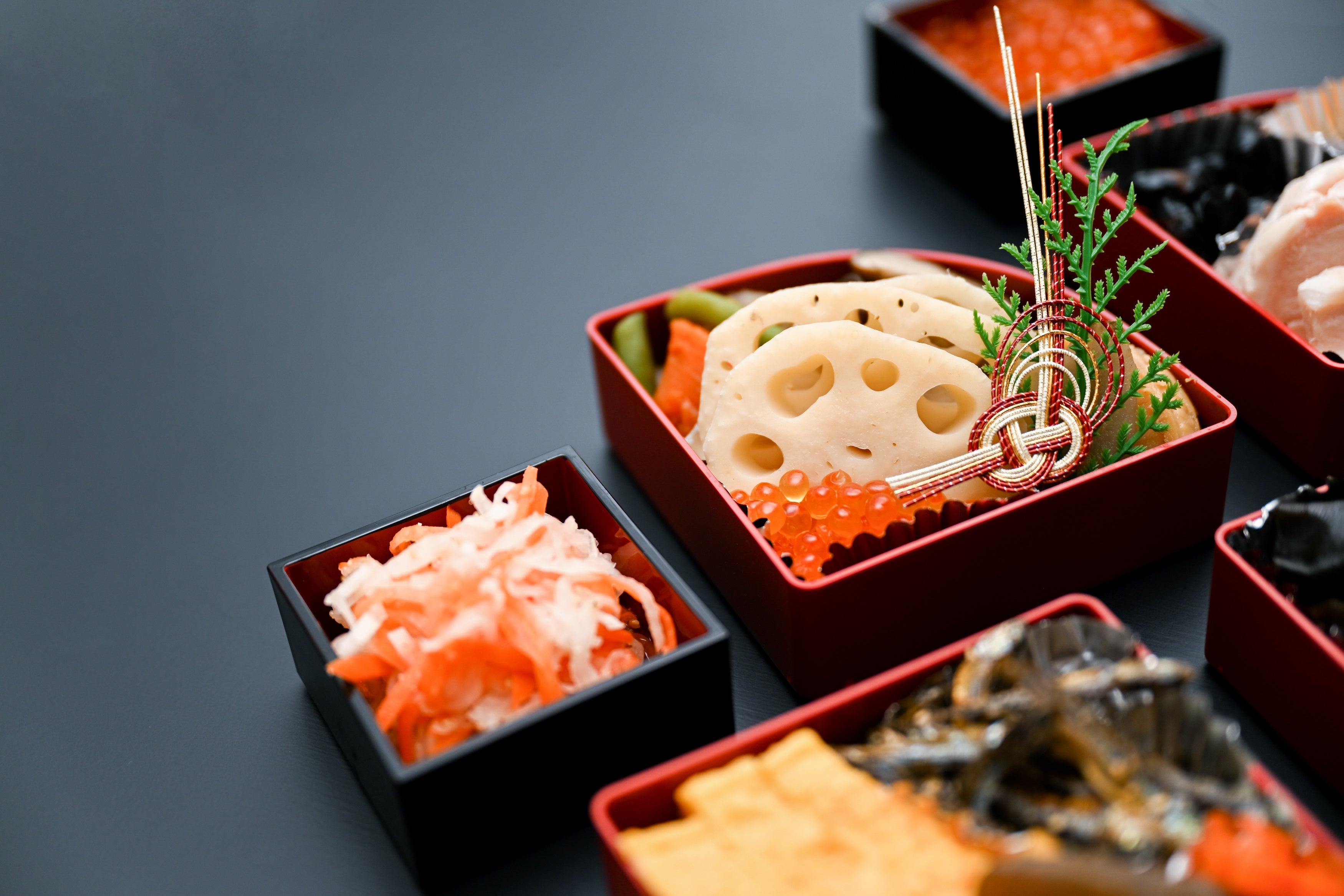
Bento boxes came in various shapes and sizes, but they typically held a single portion and were either round or square. Among commoners, the most popular shape was the oval bento box called “wappa”. Wappa were made by bending wooden boards. Their round shape, light weight, and excellent ventilation made them practical, and they became highly valued in daily life. Many wappa bento boxes feature multiple tiers with separate compartments, making it easy to neatly arrange a variety of small dishes.
Lacquer-coated, hand-painted bento boxes were once reserved for the nobility, but over time they became accessible to anyone who appreciates the small beauties of everyday life.
Riceye offers 4 kinds of bento boxes.
Shirakinuri Tamonidan Bento Box, Small

A two-tier wooden bento box inside covered with red urushi lacquer. Shirakinuri is a traditional Japanese lacquer technique where the natural wood surface is left mostly unpainted, showing the grain, and is coated with a very thin layer of transparent urushi lacquer.
☞ $137.50 / piece
Shirakinuri Tamonidan Bento Box, Large

☞ $162.80 / piece
Sakura Koban Bento Tameuchishu

This bento box is a beautiful picnic accessory—perfect for a pretty and delicious meal in a nearby park.
☞ $176.00 / piece
Kyo Nagakaku Bento Tameuchishu

Lacquered lunch box for a stylish meal anywhere, anytime.
☞ $143.00 / piece

Traditionally, bento boxes were wrapped in a silk or cotton cloth called a furoshiki. Simple and economical, it was used again and again to carry everyday items—gifts, groceries and lunch boxes—outdoors. Both practical and sustainable, the cloth also adds a touch of style—unfolding into a neat, elegant mat beneath your lunch once unwrapped. We offer two kinds of furoshiki, both stylish and carrying symbolic meaning.

Cotton wrapping cloth wth “an assortment of treasures” pattern. These motifs represent good fortune, prosperity, and abundance.
☞ $11.00 / piece

Cotton wrapping cloth wth hyotan (gourd) pattern—the symbol of great luck in Japan.
☞ $11.00 / piece
Onigiri carries stories of daily life, travel, and happy moments shared across generations. With just rice and a few ingredients, onigiri keeps bringing comfort, creativity, and a taste of Japan wherever it is enjoyed.


Leave a comment